AI-generated image
The Threshold of Transformation: Biblical Symbolism of Doorways and Entrances
The Architecture of Sacred Space
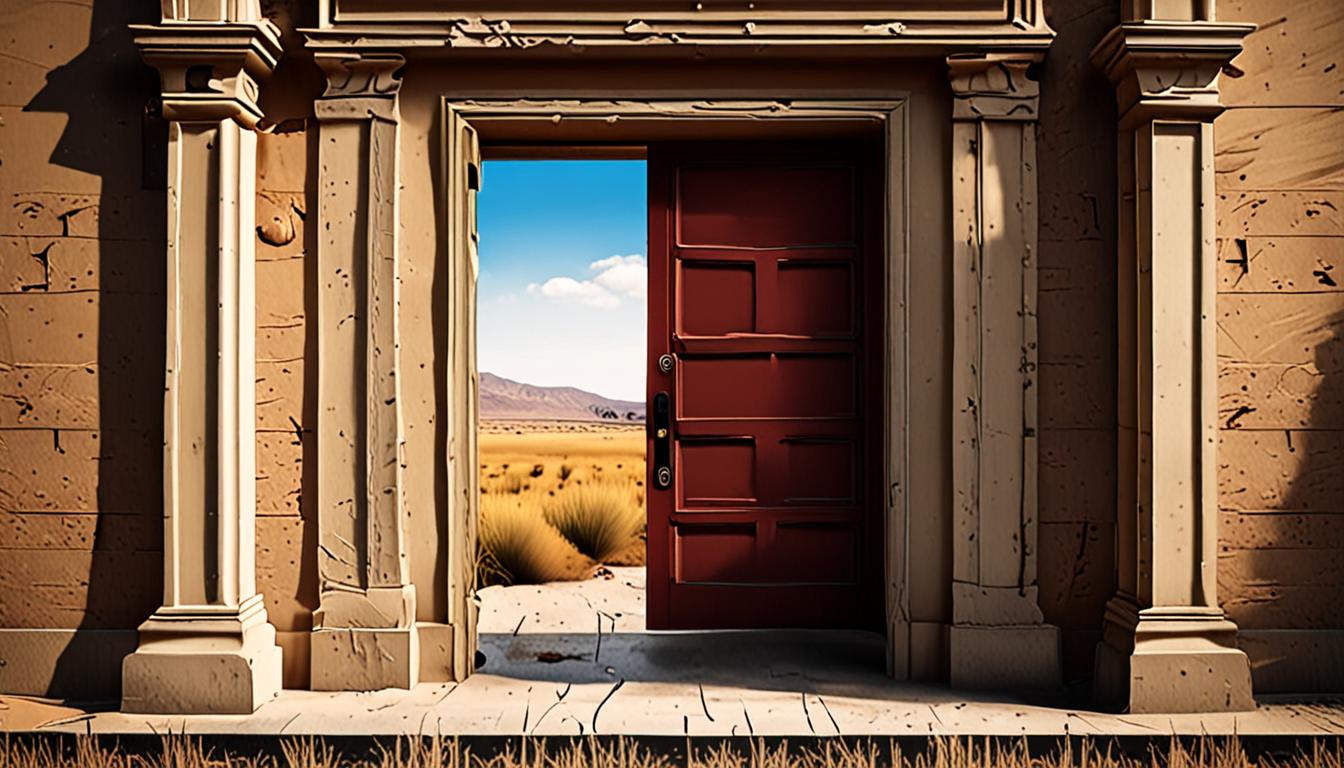
In the ancient Near Eastern world, the threshold was never a neutral space. It was considered a liminal zone—a place of transition where the ordinary world met the extraordinary, and where human activity intersected with divine intervention. Throughout the biblical narrative, doorways, gates, and lintels function as critical symbolic markers. These architectural elements are not merely utilitarian; they represent the boundaries of covenant, the parameters of holiness, and the specific locations where the sovereignty of God is asserted over the conditions of human existence.
To understand the biblical view of the threshold, one must first recognize the distinction between the sacred and the profane. The threshold serves as the filter through which one passes from the mundane life of the world into the presence of the Divine. Whether it is the entrance to the Tabernacle, the gates of the Temple, or the lintel of a domestic dwelling, the threshold demands a change in status. One does not cross it casually; one crosses it with preparation, purification, or, in the case of the Passover, divine protection.
The Blood on the Lintel: A Threshold of Deliverance
Perhaps the most potent example of threshold symbolism occurs in the book of Exodus. During the final plague against Egypt, the Israelites were commanded to apply the blood of the Passover lamb to the two side posts and the upper lintel of their houses (Exodus 12:7). This act transformed the threshold into a sign of covenantal identity. The text states, 'The blood will be a sign for you on the houses where you are, and when I see the blood, I will pass over you' (Exodus 12:13).
Here, the threshold becomes the site of divine judgment and mercy. The destroyer, tasked with executing justice upon the firstborn of Egypt, is restricted by the presence of the blood on the threshold. This ritual underscores that deliverance is not merely about physical location but about being under the covering of the covenant. The threshold acted as a boundary of grace. By marking the entrance, the Israelites were identifying their homes as domains belonging to Yahweh, effectively separating them from the judgment falling upon the surrounding culture.
The Temple Gates and the Presence of God
In the later history of Israel, the Temple served as the ultimate threshold. The entrance to the Holy of Holies was protected by a thick veil, a symbolic threshold that only the High Priest could cross once a year on the Day of Atonement. This was the point where heaven and earth met. The architecture of the Temple was designed to emphasize that God is holy and that access to Him is strictly regulated.
The Psalms frequently refer to these thresholds with reverence and longing. In Psalm 84:10, the psalmist declares, 'I would rather be a doorkeeper in the house of my God than dwell in the tents of the wicked.' The 'doorkeeper' (or one who stands at the threshold) is positioned at the intersection of God’s glory and the human condition. It is a place of profound honor because it is the closest proximity to the Divine that the average worshiper could attain. The gate is not a barrier to exclude; it is a boundary to preserve the holiness of the One who dwells within.
The Doorway of the New Covenant
The transition from the Old Testament to the New Testament shifts the focus from physical architecture to the person of Jesus Christ. In the Gospel of John, Jesus explicitly redefines the concept of the threshold. He declares, 'I am the door; if anyone enters through Me, he will be saved' (John 10:9). This statement is revolutionary. It effectively replaces the physical Temple, its gates, and its veils with a human, historical figure.
By identifying Himself as the 'door,' Jesus positions Himself as the only legitimate transition point between the fallen world and the Kingdom of God. This imagery suggests that salvation is not attained by passing through stone portals or observing ritual architecture, but by entering into a relational union with Christ. The threshold is no longer a geographical location in Jerusalem; it is a spiritual reality accessible to all who come to Him by faith.
The Eschatological Threshold
The theme of the door continues into the book of Revelation, where Christ is depicted as the one who 'opens and no one will shut, and who shuts and no one opens' (Revelation 3:7). Here, the threshold is linked to the finality of history and the ultimate judgment. The 'open door' in Revelation 4:1 represents an invitation into the heavenly throne room, while the closed doors represent the finality of rejected opportunities for repentance.
This eschatological threshold reminds the reader that time itself is a passage. The biblical narrative constantly warns that the current 'door' of opportunity—the time of grace—is finite. The symbolism of the threshold serves as a call to urgency. One must choose to enter while the door remains open. It is a reminder that faith is a movement from one state of being to another, a crossing over from the kingdom of darkness into the kingdom of light.
Living at the Threshold
For the modern believer, the symbolism of the threshold offers a practical framework for faith. It invites us to view our daily lives as being lived in the presence of God. If the threshold is the place where the sacred meets the profane, then every entrance we cross—the door to our home, our workplace, or our place of worship—can be viewed as a reminder of our covenantal identity. We are, in a sense, always standing at the threshold of God’s grace.
This perspective requires a posture of humility and intentionality. Just as the Israelites marked their lintels to acknowledge God’s protection, we are called to acknowledge His lordship over every 'doorway' of our lives. Whether we are facing a transition in life, a time of testing, or an opportunity for service, we remain under the covering of the One who is the true Gate. The biblical narrative encourages us to cross these thresholds with the confidence that we are not entering alone, but are being ushered into the presence of the One who has already paved the way.